
Mosques and charitable organisations across the UAE collect substantial cash donations - through collection boxes, Ramadan and zakat appeals, and community fundraisers - often using procedures that wouldn't survive basic scrutiny in any other organisation: hand-counted donations, single-person access to funds, and little to no documentation trail.
The consequences of getting this wrong are real. When a discrepancy surfaces in an organisation with no controls, suspicion falls on everyone involved. When it surfaces in an organisation with a documented system, you can trace it, resolve it, and move on - and, just as importantly, donors can trust that their contributions are handled with the same care as their intention behind giving them.
In this article, we'll show you how to tighten cash controls, reduce risk, and safeguard your community's giving before small mistakes turn into major problems.
Why Mosques, and Charities Are Uniquely Vulnerable
Most organisations that handle significant amounts of cash - banks, exchange houses, large retailers operate under strict regulatory frameworks with professional staff trained in cash-handling procedures. Mosques and charities typically operate in a different environment.
They're high-trust, low-oversight organisations by nature. Cash arrives anonymously through collection boxes and event fundraisers. The people counting it are often volunteers or committee members with minimal formal cash-handling training. And because the culture around religious and charitable giving is built on trust, raising the topic of controls can feel, to some, like an accusation.
That framing is exactly backward. Cash controls don't exist because you suspect someone of wrongdoing. They exist to protect everyone involved - the volunteers who count, the staff who deposit, and the leadership that's ultimately accountable to the community and to the UAE's charity regulators. When controls are documented and consistently followed, a discrepancy becomes something you can trace and resolve, rather than something that quietly erodes trust.
Collection Controls: From the Plate to the Counting Room
The donation leaves the collection point and enters a window of vulnerability. What happens in the next few minutes determines whether your cash handling is accountable or just hopeful.
Two unrelated individuals should carry the offering from the sanctuary to the counting room. "Unrelated" matters here - spouses, parents and children, or close business partners counting together don't satisfy the dual-custody requirement in any meaningful way.
Donations should go directly to a secure counting area. No stops, no detours. Any break in the chain of custody creates a gap that's impossible to account for later. If donations can't be counted immediately - after Jummah, during Ramadan collection periods, or midweek events — place them in a tamper-evident bag, seal it in front of a witness, and secure it until counting can begin.
Lock the door during counting. This isn't paranoia; it's procedure. An open counting room invites interruptions, distractions, and questions about who was present when discrepancies arise.
Camera coverage of the counting area is increasingly standard practice. It protects volunteers against false accusations just as much as it deters misconduct - a simple, visible camera with recorded footage costs far less than a single disputed collection.
Counting Procedures That Protect Volunteers and Leadership
Every count requires at least two unrelated counters. This dual-custody principle is non-negotiable - it's the single most important control throughout the entire cash-handling process.
Rotate your counting teams: The same two people counting every week for years creates both opportunity and suspicion, even when nothing is wrong. A rotation schedule of four to six teams gives you coverage without burning out volunteers.
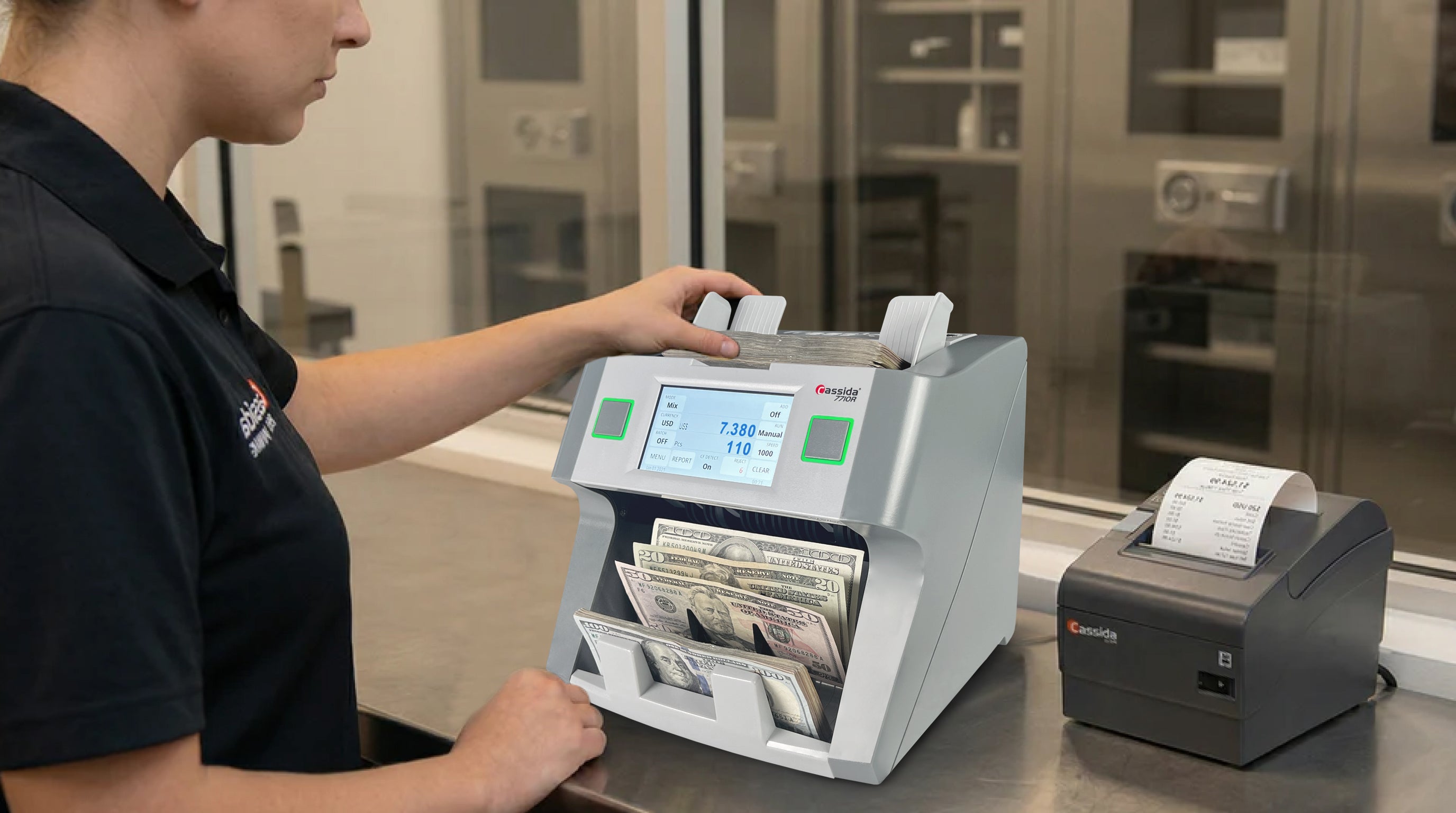
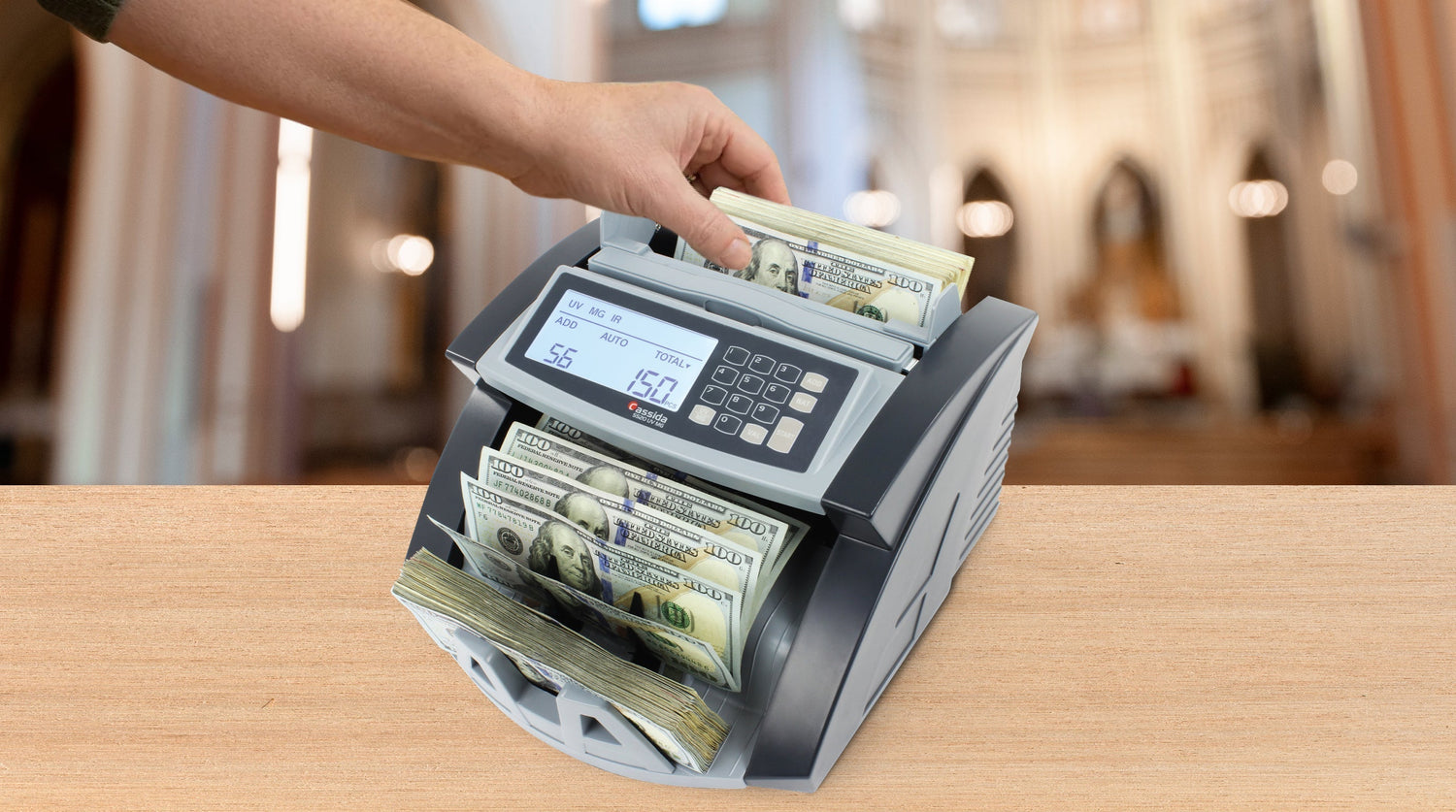
Sort notes by denomination and run them through a bill counter with ValuCount for verified totals: Hand-counting cash is slow, error-prone, and impossible to verify afterward. Cassida's 5520UVMG and 6600UV counters process sorted AED denominations at up to 1,300–1,400 notes per minute with built-in UV/MG/IR counterfeit detection, producing a machine-verified total in a fraction of the time hand-counting takes. For mosques and charities that regularly receive mixed AED denominations — or foreign currency from an international congregation — a mixed-value counter like the AXIA or Xpecto eliminates the sorting step entirely.
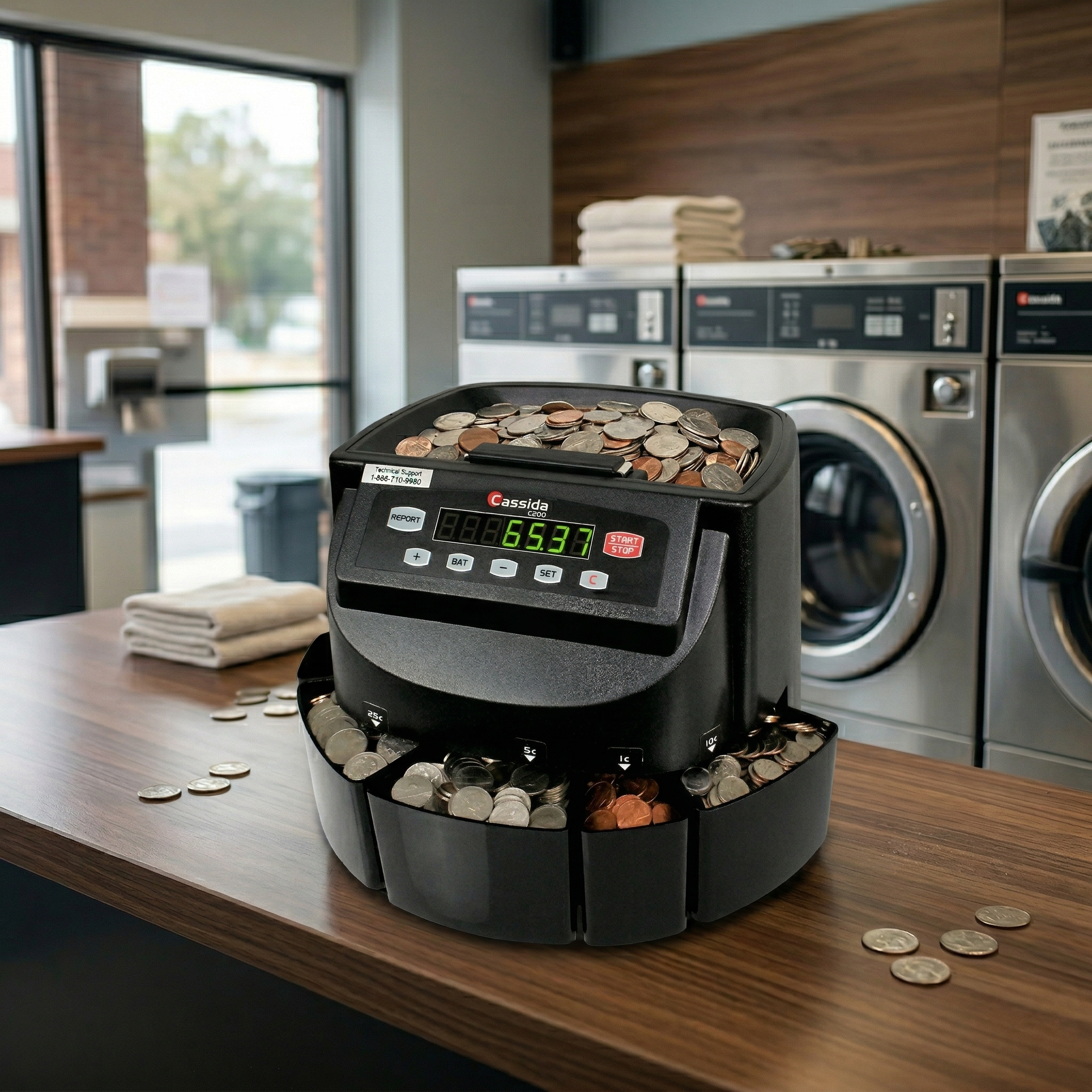
Count coins with a coin counter rather than hand-estimating: Coin totals are among the most commonly under-counted amounts on donation sheets, because hand-counting coins is tedious and imprecise. The Cassida Coinmaster, calibrated for AED coin denominations, removes the guesswork.
List cheques and bank transfers individually - donor name and amount - for contribution records. This step creates the documentation you need for donor records and gives you a line-item record that can be reconciled against bank deposits.
All counters sign the donation count sheet before anyone leaves the room.** Signatures confirm that every person present agrees with the recorded totals. No exceptions, no "I'll sign it later."
Documentation: The Offering Count Sheet
The donation count sheet is the anchor document for your entire financial record. Every downstream process - your bank deposit, your general ledger entry, your donor records, your monthly reconciliation - traces back to this single page. If it's incomplete or inaccurate, everything built on top of it will be unreliable.
Every count sheet should include the date, the collection or event name, the note total broken down by denomination, the coin total, the cheque/transfer total with individual listings, the grand total, any variance from expected amounts, and the printed names and signatures of all counters present.
Where your counter supports it - Cassida's Neo Max, for instance, includes a built-in printer - attach the printed count report to every sheet for an independent, machine-generated record that exists alongside the handwritten totals.
Keep original count sheets on file for a minimum of several years. The UAE's Federal Tax Authority requires VAT-related financial records to be retained for at least five years, and your organisation's charity regulator may set its own retention requirements on top of that. Check with a qualified accountant or the relevant regulatory authority for guidance specific to your organisation.
Counterfeit Detection in Open-Door Environments
Anyone can drop anything into a collection box. There's no point-of-sale terminal verifying notes, no trained cashier checking for security features. Mosques and charities typically discover counterfeits only during counting - not at the moment of donation - and only if their counting process includes detection.
Bill counters that use multi-sensor detection - UV, magnetic (MG), and infrared (IR) - catch counterfeits as notes are processed automatically. The machine flags suspect notes without slowing down the count, and your counters don't need any training in counterfeit identification.
For organisations that want a standalone detection option for event cash, large one-off donations, or notes received outside the normal collection process, Cassida's dedicated counterfeit detectors provide fast, reliable verification using the same multi-sensor technology.
Counterfeiting isn't a common problem at most mosques or charities. But one undetected high-denomination counterfeit note wipes out the value of not having detection - and it's a loss that's entirely preventable with equipment most organisations should already have for counting efficiency.
Bank Deposits and Reconciliation
The rule is simple: deposit the full collection. Never spend directly from a donation box. Not for petty cash, not for a last-minute supply run, not for anything. The moment cash leaves the documented chain before reaching the bank, you've created an untraceable gap in your records.
The deposit slip total must exactly match the donation count sheet total. Any discrepancy - even a small one - should be documented, investigated, and resolved. Small discrepancies ignored today become patterns exploited tomorrow.
Deposit within one business day of collection wherever possible. Cash sitting in a mosque or charity office safe over a long weekend is cash that's accumulating risk.
Reconcile bank deposit confirmations against count sheets monthly. This is where you catch discrepancies between what was counted, what was deposited, and what the bank actually received.
If your organisation manages restricted or designated funds - a building or renovation fund, zakat, or specific relief campaigns - maintain separate tracking for those amounts. Commingling designated donations with general operating funds creates both an accounting problem and a potential compliance issue with your charity regulator.
Internal Controls for Volunteer-Run Organizations
The core principle of internal controls is the separation of duties: the person who counts shouldn't be the person who deposits, and neither should be the person who reconciles the bank statement. When one individual controls multiple stages of the cash-handling process, you've created a system that relies entirely on that person's integrity - and eliminated any mechanism to detect a problem if integrity fails.
No single individual should have unchecked access to funds at any stage. This includes the imam, the treasurer, and the longest-serving volunteer. Controls apply to everyone, or they protect no one.
The finance or oversight committee should review reconciliation reports monthly. This review doesn't need to be a forensic audit - it's a check to confirm that documented procedures are being followed and that the numbers make sense.
Conduct an annual independent review. A full independent audit by a qualified accountant is the gold standard, but even an informal review by a qualified member not involved in day-to-day financial operations is better than nothing.
Written financial policies, formally adopted by your organisation's leadership, create accountability and set expectations. New volunteers know what's expected from day one.
Regulatory Context in the UAE
Mosques and registered charities in the UAE operate under oversight from bodies that vary by emirate - including Dubai's Islamic Affairs and Charitable Activities Department (IACAD), the General Authority of Islamic Affairs and Endowments (Awqaf) at the federal level, and the Community Development Authority (CDA) or Ministry of Community Empowerment for registered charitable associations. Public fundraising campaigns in the UAE generally require prior licensing through the relevant authority, and unlicensed collection of donations - including through informal channels - can carry legal consequences.
Suspicious cash activity, where relevant, is reportable to the UAE's Financial Intelligence Unit through the federal goAML system. Most day-to-day mosque and charity cash handling won't trigger this, but organisations that receive unusually large or unexplained cash donations should be aware of the reporting framework and consult their accountant or legal advisor.
Special Situations: Events, Fundraisers, and Designated Giving
Fundraiser cash follows the same rules as regular collection cash. Whether it's an iftar fundraiser, a community bazaar, or a fun run, the principles remain the same: dual custody, immediate documentation, secure handling, and timely deposit. The informal atmosphere of a fundraising event is exactly where controls are most likely to slip - and most needed.
Designated gifts - building fund contributions, zakat, specific relief campaigns - must be tracked separately from general donations. Donors who designate a gift for a specific purpose have a reasonable expectation that it will be used for that purpose.
Digital and card donations have grown significantly, but they haven't eliminated cash. Many mosques and charities still receive a substantial share of donations in cash, particularly during Ramadan and at in-person events. Digital giving supplements cash - it doesn't replace it, and doesn't reduce the need for physical cash controls.
Plan for volume spikes. Ramadan, Eid appeals, and major fundraising campaigns can push collection volumes to several times normal levels. Make sure you have enough counting capacity and trained volunteers scheduled for peak periods. Running a large Ramadan collection through a process designed for a quiet weekday is how errors and shortcuts happen.
Frequently Asked Questions
#1. How many people should count donations?
A minimum of two unrelated individuals for every count, no exceptions. "Unrelated" means no spouses, family members, or close business partners counting together. Larger churches with higher offering volumes may need three or four counters to process efficiently, but two is the minimum for accountability.
#2. Should mosques use a bill counter for offerings?
Yes. A bill counter eliminates hand-counting errors, produces a machine-verified total, and - when equipped with UV/MG/IR sensors - automatically screens for counterfeits. It also significantly reduces counting time, meaning less time volunteers spend behind a locked door and faster deposits to the bank. For most organisations, a standard single-denomination bill counter with ValuCount and counterfeit detection is the right fit; mixed-value counters make sense for organisations regularly receiving unsorted or multi-currency donations.
#3. How long should a mosque or charity keep financial records?
The UAE's Federal Tax Authority requires VAT-related financial records to be kept for a minimum of five years. Your charity regulator may set additional or longer retention requirements for donation records, count sheets, and deposit slips. Consult a qualified accountant for guidance specific to your organisation's registration and structure.
#4. What happens when a mosque or charity discovers financial misconduct?
Secure all financial records immediately - paper and electronic. Contact your organisation's legal advisor and, where applicable, your regulatory authority and insurer. Consider engaging a qualified accountant to assess the scope. Handling misconduct quietly and allowing the situation to pass unreported exposes other organisations, and the wider community's trust, to the same risk.
#5. Do small mosques and charities need formal cash controls?
Smaller organisations need controls more, not less. They typically have fewer volunteers, which means less natural separation of duties and more opportunity for a single individual to control multiple stages of cash handling. The controls don't need to be elaborate - two-person counting, signed count sheets, timely deposits, and monthly reconciliation cover the fundamentals regardless of organisation size.
#6. How should designated donations be handled?
Track designated gifts separately from general donations, either through separate bank accounts or a fund-tracking system that maintains distinct records within a single account. Document the designation at the point of counting, report designated fund balances to your oversight committee regularly, and ensure restricted funds are spent only for their intended purpose.
Key Takeaways
Cash income controls aren't about distrust - they're about protecting your volunteers, your leadership, and the donors who give generously. The framework is simple: dual custody from the plate to the counting room, machine-verified counts with bill counters and coin counters, complete documentation on every count sheet, timely deposits, monthly reconciliation, and separation of duties at every stage. None of this requires a professional accounting staff or an expensive overhaul. It requires written policies, consistent execution, and leadership willing to treat financial accountability as a core responsibility - because it is.