

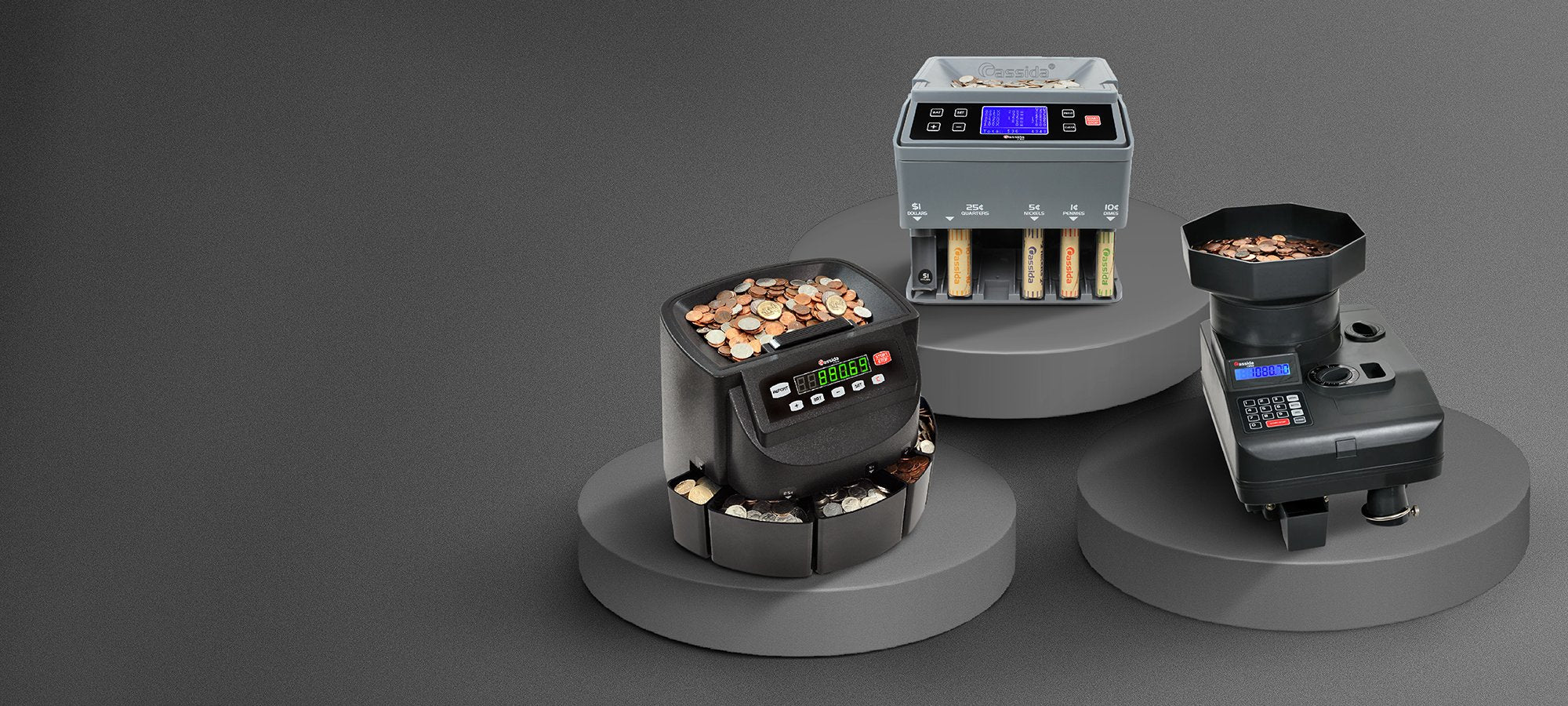
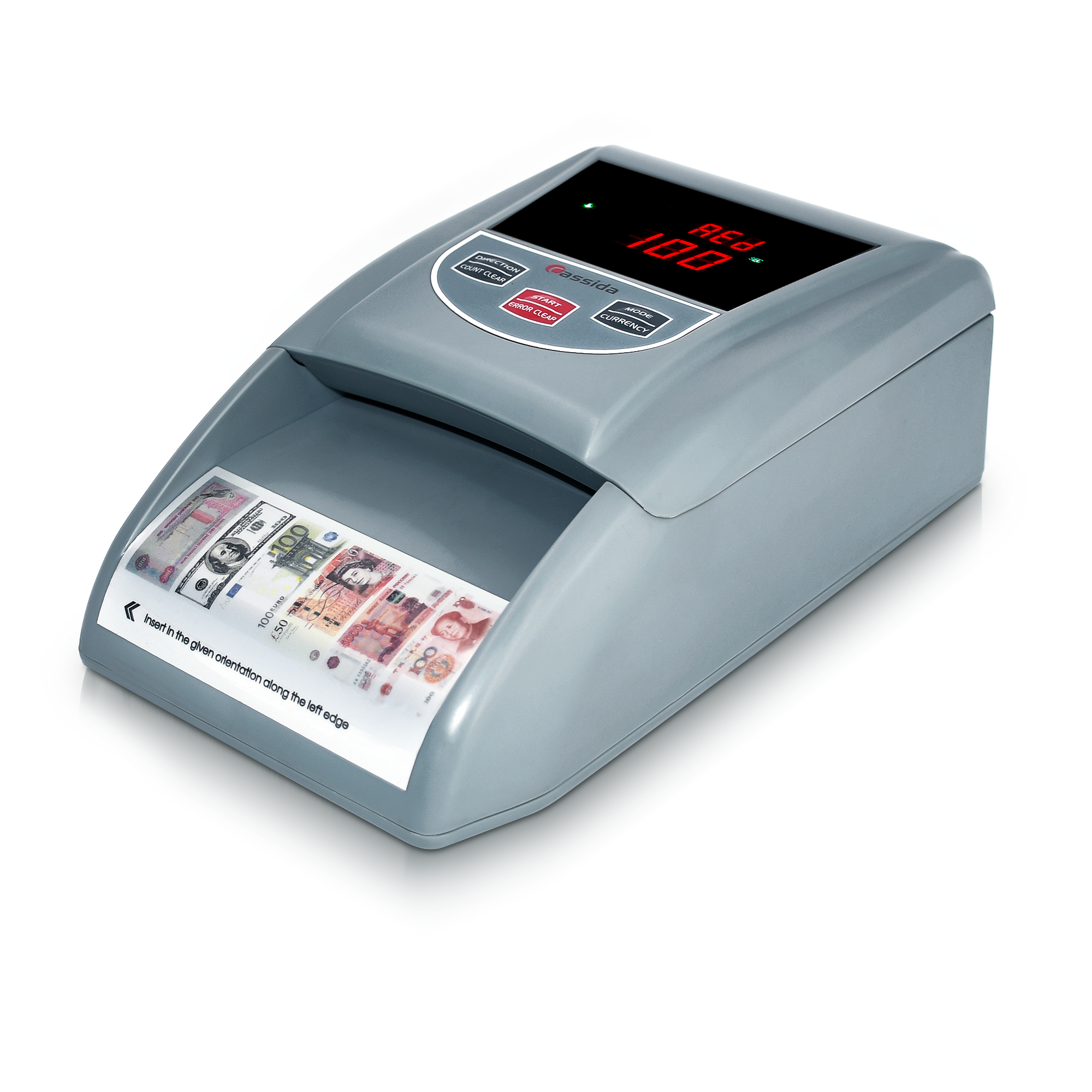
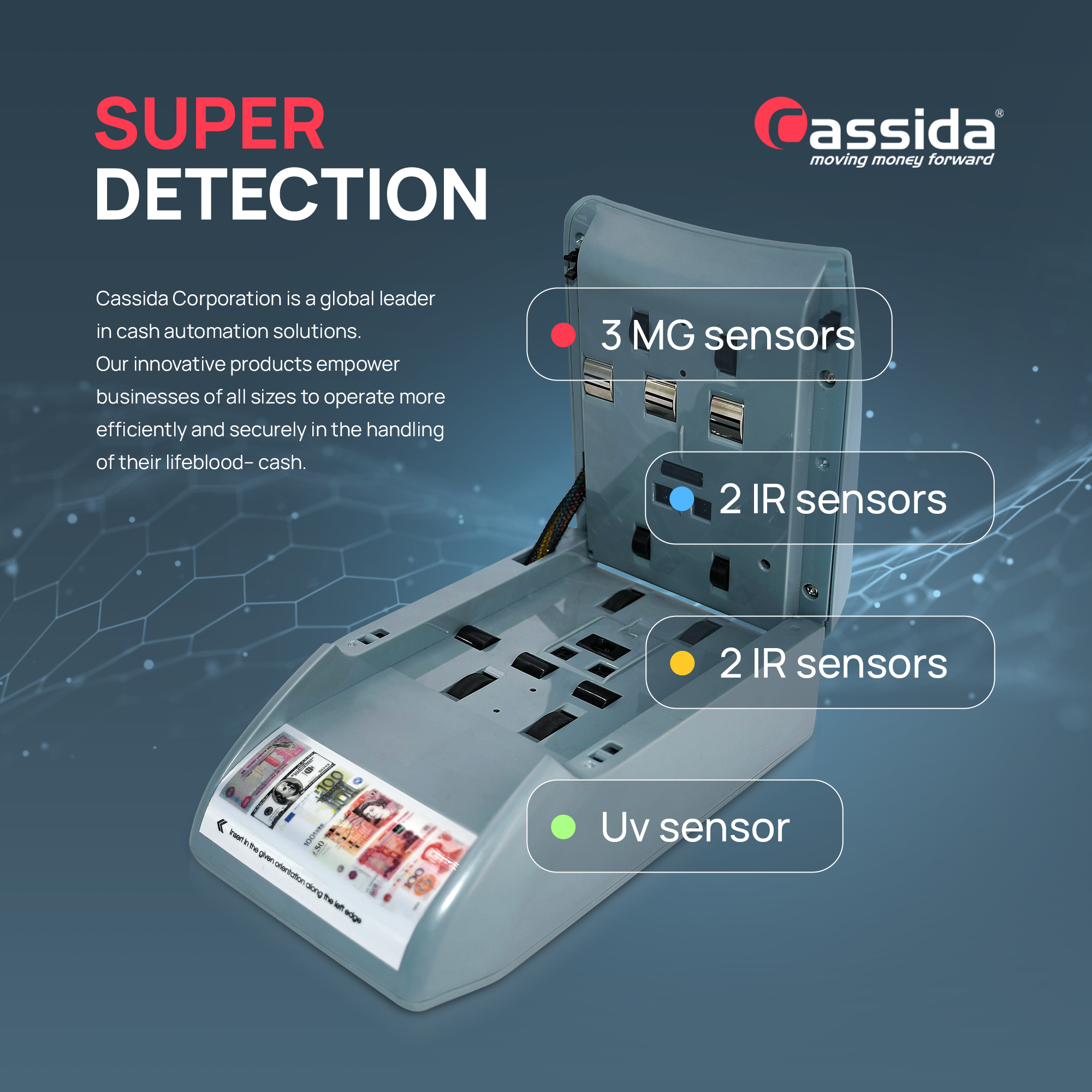
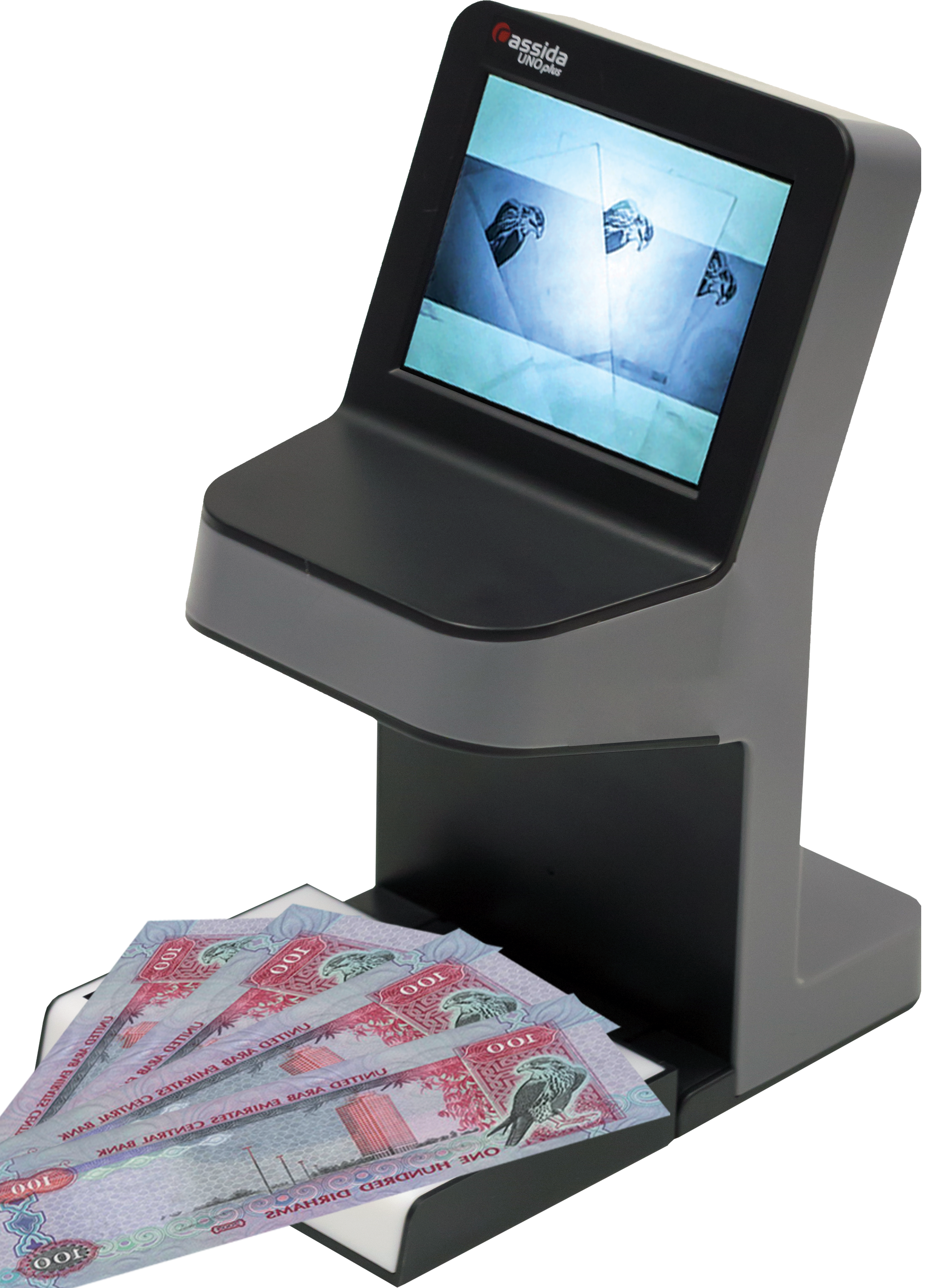
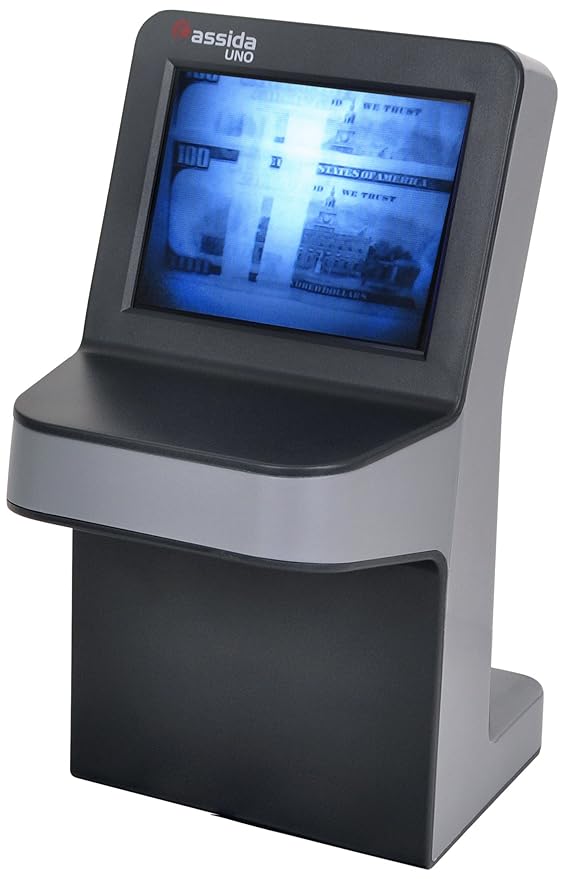
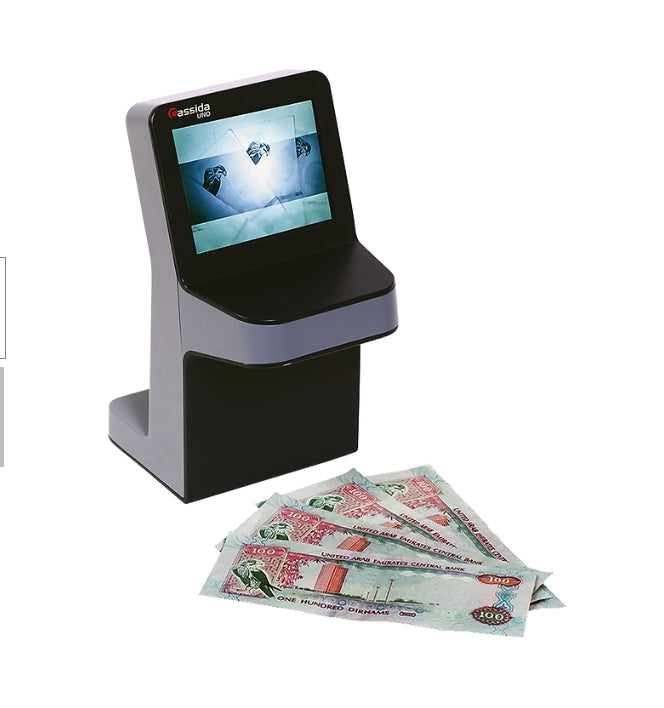
Multi-sensor counterfeit detectors for financial institutions and high-traffic businesses deliver fast, reliable currency authentication, significantly reducing manual inspection time and helping prevent costly errors. These professional-grade counterfeit detection machines utilize advanced multi-point sensors, including UV, magnetic, infrared, and size detection, to verify each bill on the spot. Acting as automated cash processors, they support strict anti-fraud protocols and integrate effortlessly into any cash-handling workflow. Built for durability and ease of use, these standalone fraud prevention devices are ideal for banks, retail stores, casinos, and government offices. Learn how to use them effectively in our blog, Counterfeit Money Detectors: Why You Need One and How to Use It. To build a complete fraud-resistant cash management system, pair our counterfeit detectors with Cassida mixed-denomination bill counters or coin counters and sorters for end-to-end currency control.
Safeguard your business against fraudulent currency with Cassida's commercial-grade counterfeit money detectors. We offer a comprehensive range of UV verification systems, magnetic ink sensors, and advanced combination detectors perfect for financial institutions, retail operations, and high-volume cash businesses. Every unit delivers fast, precise bill authentication, ensuring confidence in all your financial transactions.
Types of Note Detectors
Selecting the right counterfeit detector is essential for securing your operations and ensuring transaction integrity. Your ideal solution will depend on your unique operational requirements and the frequency of your daily transactions. Here are the primary categories to explore:
- UV (ultraviolet) detectors. Reveal hidden security elements not visible to the human eye through ultraviolet illumination.
- Magnetic detectors. Recognize the magnetic properties in genuine currency ink.
- Infrared detectors. Analyze the infrared characteristics of legitimate banknotes.
- Watermark detectors. Confirm the presence of watermarks and embedded security strips on paper bills.
- Multi-detection systems. Integrate UV, magnetic, infrared, and dimensional checks for thorough authentication.
- Counterfeit detector pens. Compact chemical markers for rapid on-the-spot verification.
- Automatic detectors. Rapid verification machines that authenticate bills during the counting process.
How Note Detectors Work
Counterfeit detectors authenticate currency by examining security elements that forgers struggle to duplicate. Ultraviolet technology, for example, reveals fluorescent marks and security fibers visible only under UV exposure. Magnetic analysis detects the unique magnetic properties in the ink of legitimate currency. For maximum precision, high-end combination systems employ multiple authentication techniques, including infrared analysis, dimensional verification, and thickness measurement, to identify even the most advanced forgeries.
Key Features to Consider When Buying a Bill Counter
Selecting an effective counterfeit detector ensures optimal security and seamless operational integration. Evaluate these specifications to identify the ideal solution for your business needs:
- Detection methods. Combined verification technologies (UV, magnetic, infrared) deliver superior precision compared to single-function units.
- Speed and throughput. Select based on daily transaction volume; busy operations require faster authentication.
- Currency compatibility. Verify the unit recognizes all bill values and currencies you process.
- Ease of use. Simple interfaces and unmistakable alerts minimize staff training and reduce the likelihood of mistakes.
- Portability. Lightweight, battery-operated designs provide versatility for multiple sites or mobile operations.
- Durability. Professional-grade construction ensures dependable operation in demanding environments.
- Automatic vs manual. Automatic units work in conjunction with bill counters to enhance productivity; manual designs, on the other hand, enable detailed individual inspection.
- Display and alerts. Distinct visual and audible signals enable personnel to spot questionable bills quickly.
- Maintenance requirements. Minimal-upkeep designs decrease ongoing expenses and operational interruptions.
Warranty and support. Extensive coverage safeguards your purchase and guarantees continued performance.
Frequently Asked Questions
What is the most accurate type of counterfeit detector?
Combination detectors that use UV, magnetic, infrared, and size checks offer the highest accuracy, often above 99.9%. These comprehensive devices can spot advanced counterfeits that single-feature detectors miss. For optimal security, especially in banks and currency exchange offices, opt for combination detectors.
Do counterfeit detector pens really work?
Counterfeit-detection pens offer simple authentication by detecting starch content in paper; however, they have limitations and may miss sophisticated fakes made from authentic currency stock. They serve well for rapid initial screening in lower-volume settings. For dependable security, particularly with larger-denomination bills, consider UV or combination detection systems that examine multiple security elements.
How often should counterfeit detectors be calibrated or maintained?
The majority of electronic counterfeit detectors require minimal upkeep, typically only routine cleaning of UV lamps and detection sensors every 3-6 months. UV lamps may need to be replaced annually, depending on device use frequency. Firmware upgrades should be applied when released to detect updated currency features. Consistently adhere to the manufacturer's service guidelines to maintain peak authentication performance.
Can counterfeit detectors verify foreign currency?
Numerous sophisticated counterfeit detectors can authenticate various currencies; however, it is essential to verify that the detector supports the specific currency you intend to use before making a purchase. Combination detection systems featuring configurable parameters generally process international bills more effectively than entry-level units. Review the technical specifications or contact Cassida to confirm that the detector is compatible with every currency your operation processes.
What's the difference between a counterfeit detector and a bill counter with detection?
A standalone counterfeit detector focuses exclusively on authentication, utilizing advanced detection technologies, whereas a bill counter with detection combines counting and authentication into a single device. Bill counters with detection, emphasizing processing speed, and might employ fewer authentication techniques, which suits them for high-throughput environments where the majority of currency is genuine. For enhanced security or when examining suspicious bills, a dedicated counterfeit detector provides a more thorough examination.
Are battery-powered counterfeit detectors as reliable as plug-in models?
Battery-operated detectors offer strong reliability for mobile applications and sites with an unstable electrical supply, although they may feature somewhat weaker UV illumination than AC-powered units. Contemporary battery-driven models provide precise authentication for typical counterfeit-detection requirements. Select AC-powered units for nonstop high-capacity operation and battery-operated alternatives for portability and emergency backup.